
Victorian Government Open Data
Transport, health, environment, education and public safety. The broadest pool of Victorian government data available to builders.
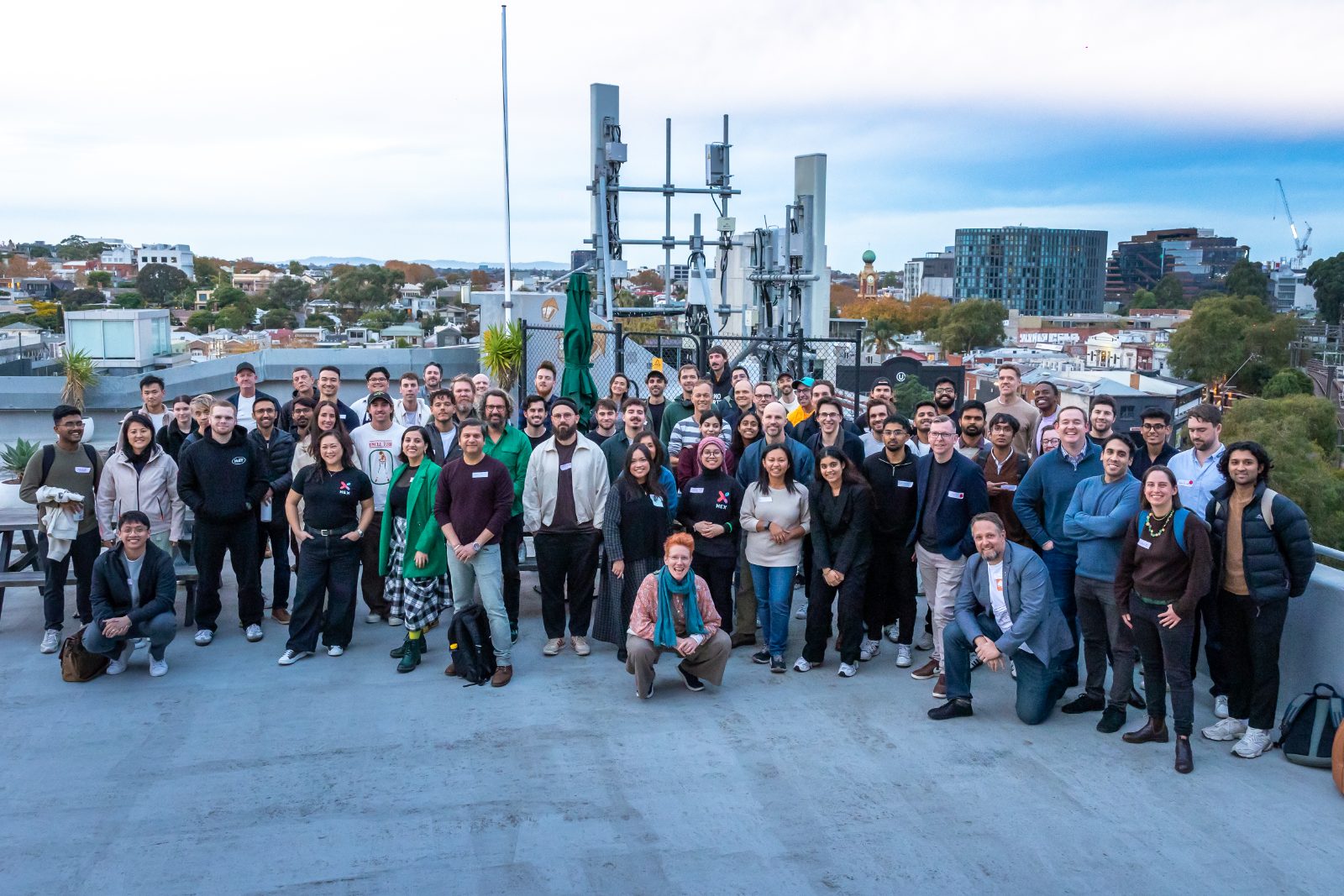
On Saturday 23 May 2026, ~60 builders gathered at Inspire9 in Richmond for the first Claude Impact Lab in APAC, building on real Australian data with Claude Code.
~60 builders. Three civic-data tracks. One Saturday at Inspire9 in Richmond, with Claude Code.
On Saturday 23 May 2026, ~60 builders gathered at Inspire9 in Richmond for the first Claude Impact Lab in APAC, building on real Australian data with Claude Code.
What happens when you use the magic of Claude and connect it to real Melbourne community issues…
 Claude
Saturday 23 May 2026 · Melbourne
Create real impact for Melbourne, solve genuine local problems, improve people's lives. Make no mistakes.
We started by bringing together some , with , some , , and some .
~400 applied for ~60 seats. The inaugural APAC Impact Lab, in a single Saturday at Inspire9, Richmond.
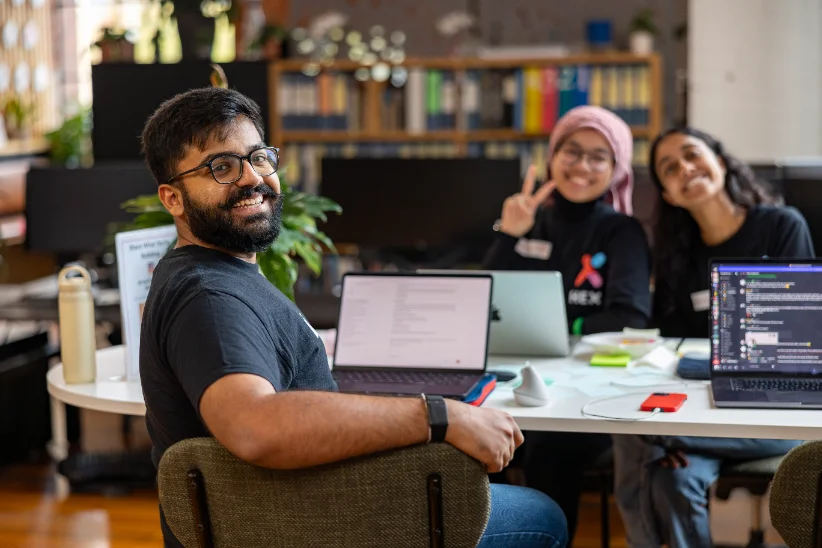
Speakers, mentors and judges who gave their Saturday to the room, rotating through every team on the hour, unblocking and pushing the work further.
Teams didn't start from a blank page. Building was grounded in real, public Australian datasets from partners who opened their data specifically for the Lab, so prototypes pointed at how Victoria and Melbourne actually move, live and work.
Transport, health, environment, education and public safety. The broadest pool of Victorian government data available to builders.

Pedestrian counts, planning and urban services, with the Lord Mayor's office invited onto the judging panel.

Sustainability demand signals provided specifically for the Impact Lab. A bespoke dataset for the day.
Food and coffee flowing all day, because people build better when they're fed. With Hectors right next door, nobody went short. This is Melbourne, after all.
And then add some extra ingredients: a , a , a , and a .
Martine Nilsen, from the Claude Code community team at Anthropic, joined remotely to welcome the room and frame the day.
Martine welcomed the room with a milestone worth marking: this was the first Claude Impact Lab in the Southern Hemisphere.
Rye framed the Impact Lab model: build genuinely useful tools on real public data, for the community. Gary welcomed the room to Melbourne and set the spirit for the day.
Rye built a custom Melbourne Impact Lab portal at claudecommunity.com.au/impact-lab, built to run the day end to end and help everyone navigate it.
Three civic-data tracks on the board. Teams chose the problem that pulled at them, then turned a dataset into something a Melburnian could actually use.
Three civic-data tracks on the board. Teams voted, locked a direction, and got building. The room chose community & citizen initiatives: how might residents and communities drive their own solutions — from circular economy models to local resource sharing — that build resilience from the ground up?
Teams worked through six sprint blocks across the day, focused on talking and building, then submitted their ideas and pitched them at 5pm.
By late afternoon, every team took the stage for a strict, timed pitch in front of a judging panel that included the Lord Mayor's office. Eight teams, eight civic problems — here's what they built.
Each team brought its own local angle, and didn't just pitch an idea. Every one demoed a working prototype, built on live data.
Live “comfort” walking routes that score every Melbourne street by how alive it feels right now — pedestrian sensors, lighting, tree canopy and venue density — then route you by Lively, Accessible or Shortest.
Tackling Melbourne's hard-waste problem with a circular-economy approach — keeping usable material out of landfill and back into the community.
A map-based platform that helps international students and new residents beat isolation — surfacing low-pressure community events at public BBQs, gardens and shared kitchens, with AI onboarding and RSVPs.
A circular-resource router that intercepts the moment of disposal and finds the nearest place to reuse, repair or recycle an item — ranked by impact, with an honest impact receipt and a Claude Desktop MCP server.
The day's winning build — a map that makes local businesses' civic and sustainability work visible. Shops publish their good deeds and earn “Heart Points” while Melburnians browse, applaud and follow a public leaderboard.
An AI concierge that helps relocating families settle and belong — building personalised practical and cultural transition plans, and routing newcomers into existing community groups.
A voice-enabled check-in companion that helps isolated seniors find nearby support, paired with a privacy-safe council dashboard that surfaces community-connection gaps across suburbs.
Helps neighbours turn forgotten urban green spaces into community gardens — checking site feasibility on sunlight, soil and water, then auto-generating permit applications and signage.
Judged on real-world impact by a panel that included the Lord Mayor's office. Final names and write-ups dropping in here soon.
The standout build of the day: a map that turns local businesses' invisible civic and sustainability work into something Melburnians can see, follow and reward — shops earn “Heart Points” for good deeds and climb a public leaderboard.
8 teams · ~60 builders · 3 civic-data tracks · one Saturday.
 Thanks, Melbourne
Want to be at the next Impact Lab, or any Claude event in Melbourne? We'd love to have you in the room.